PODPRITE NAS

Category: Uncategorized

New study: Unusual occurrences of marine mammals outside their natural habitat

New study: Unusual occurrences of marine mammals outside their natural habitat

Out of habitat marine mammals – Identification, causes, and management recommendations

A new scientific publication titled Out of habitat marine mammals: Identification, causes and management recommendations, published in the renowned journal Marine Policy, examines the increasingly frequent cases of marine mammals appearing outside their usual habitats. The study involved the participation of Morigenos, which has long been actively engaged in international projects dedicated to the research and conservation of marine mammals. The research was led by colleagues from OceanCare, a long-standing partner organisation with which Morigenos maintains close and productive collaboration.

These so-called out-of-habitat (OOH) cases refer to individual animals appearing far from their natural range or in environments that are no longer suitable for them – often as a result of food scarcity, habitat degradation, pollution, or frequent human interaction. The study emphasises that such events are becoming increasingly common, with primary causes including climate change, the loss of Arctic sea ice, changes in prey availability, underwater noise, disease, and the escape or release of animals from captivity.

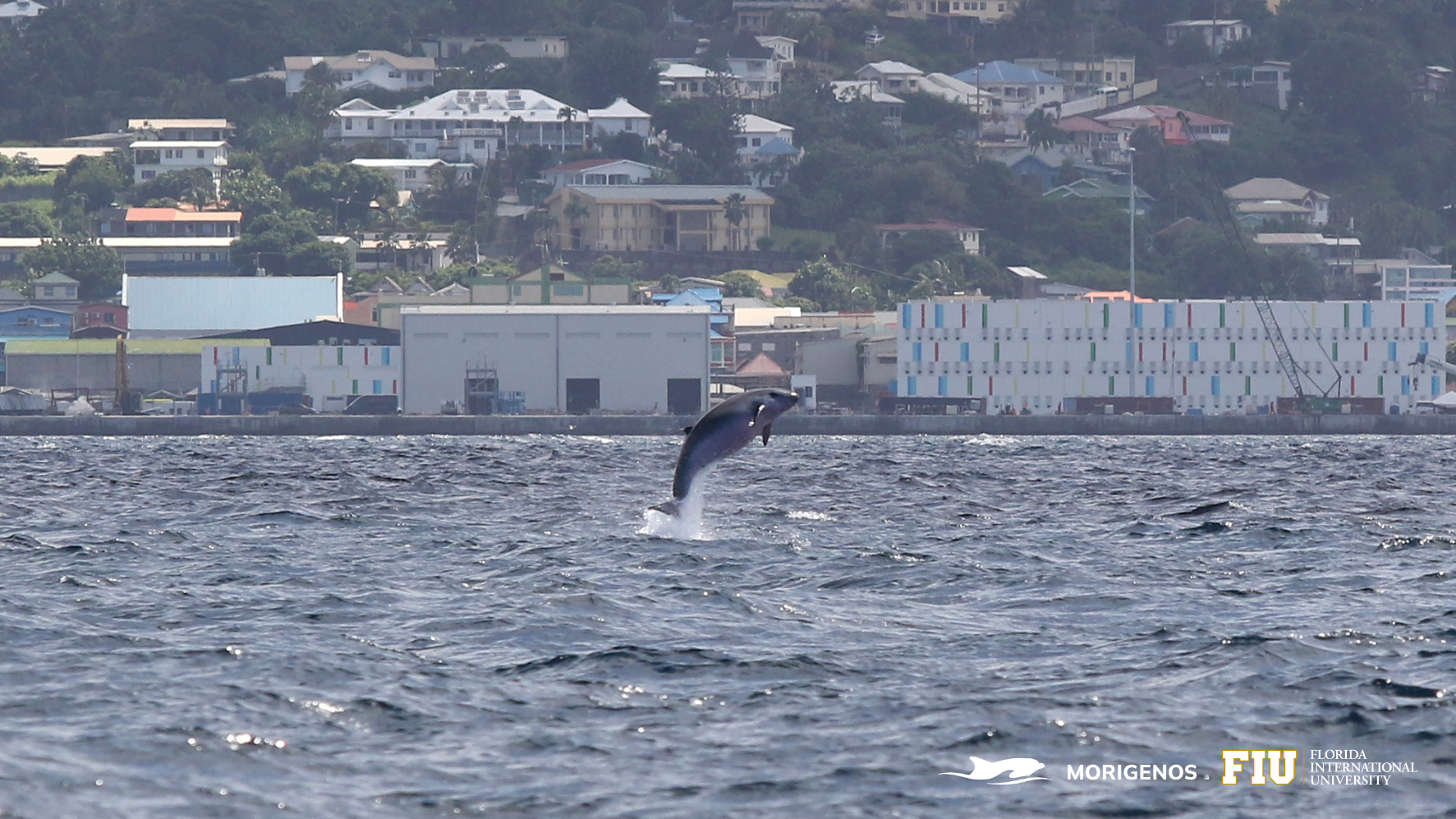
The publication presents a wide range of documented cases, including belugas in the Thames and Seine rivers and walruses resting along European coastlines. Similar occurrences have also been recorded in Slovenia – such as a humpback whale observed in Slovenia in 2009, two striped dolphins sighted in the Port of Koper in 2012, and the recent appearances of the common dolphin Ciao.

The authors stress that each situation requires careful, case-specific evaluation. In some instances, monitoring and public communication may suffice; in others, intervention such as relocation is needed. In rare and extreme cases, euthanasia may be considered. All decisions must be based on a thorough assessment of the animal’s welfare, its health condition, and the broader environmental context.

The study also underscores the importance of clear and responsible communication with the public. High levels of human interaction can cause stress, behavioural disturbance, or even danger to both animals and people. In one such case, a female walrus had to be euthanised after repeated failures by members of the public to respect safety guidance. The authors therefore call for stronger institutional coordination, well-defined response protocols, and an appropriate legal framework to enable timely, science-based, and welfare-oriented responses to such events – which are expected to become increasingly frequent in the face of ongoing environmental change.

Read the full study HERE

Common dolphin “Ciao” – What do we know about her?

Common dolphin “Ciao”

– What do we know about her?

Do you remember the common dolphin that appeared in Izola and Koper at the end of last year?

Thanks to your observations and photographs, we were able to track her movements. This dolphin is an approximately three-year-old female common dolphin (Delphinus delphis), first documented by the Morigenos team in May 2022 in the Port of Koper, where she was still accompanied by her mother. After our initial sighting in Koper, we observed them multiple times near Trieste, but in March 2023, they disappeared without a trace. Later, thanks to your reports and photos, we discovered that the young dolphin had also been seen around the Croatian islands of Rab and Krk. In November 2024, she returned to the Gulf of Trieste. Since she has now become a familiar individual, we have named her Ciao. We chose this name based on her character and behavior: as we recently reported, the dolphin had been spending time in marinas, drawing attention with her unusual behavior. She frequently approached various boats and even lifted her tail out of the water. Although Ciao often swims close to the shore and near people, it is essential to ensure that she can live undisturbed in her natural environment. If she reappears, please avoid any interaction – do not attempt to touch, feed, or swim with her.

Ciao with her mother in 2022

Interesting facts about the common dolphin:
Common dolphins were once abundant in the Adriatic Sea but are now extremely rare, mainly due to deliberate eradication in the past century. However, they remain one of the most widespread dolphin species worldwide, as their name suggests. They are highly social animals, typically living in relatively large groups that can sometimes consist of several hundred individuals. These dolphins are capable of traveling vast distances. For example, a female common dolphin we documented in the Gulf of Trieste in 2010 and 2011 had traveled from Greece, covering at least 1,000 km. Compared to bottlenose dolphins, which are the only resident dolphin species in the Gulf of Trieste, common dolphins can be recognized by their slightly smaller body size, longer and narrower beak, and the distinctive yellowish patch on their sides.
Every dolphin sighting contributes to a better understanding of their lives and, consequently, to their conservation. If you spot them, please contact us immediately at +386 31 771 077 and, if possible, send us photos or videos at pr@morigenos.org. Thank you!

Morigenos hosts a project meeting of SAMESEA partners in Piran

Morigenos hosts a project meeting of SAMESEA partners in Piran

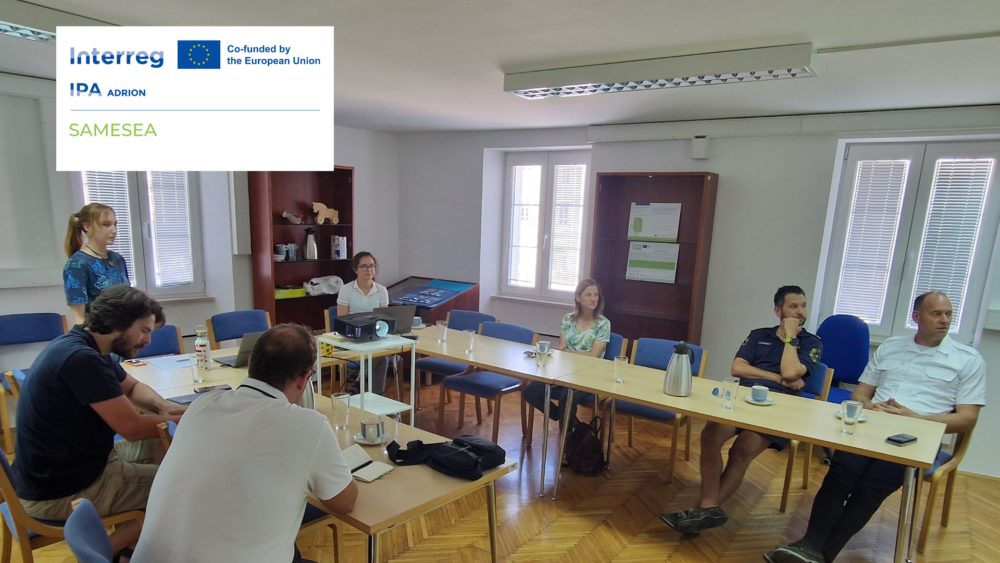
Today, Morigenos is hosting a meeting in Piran with the partners of the SAMESEA project: SustainAble Management of marinE Sentinel spEcies and human Activities interaction. Co-financed by the European Union through the Interreg IPA ADRION programme, the project brings together 11 partners from the Adriatic-Ionian region with the aim of addressing key challenges in marine biodiversity conservation and ecosystem monitoring in a coordinated manner.
During the meeting, project partners will discuss the implementation of SAMESEA, present the progress achieved so far, and outline the next steps. The discussions will focus on data collection and analysis, the development of monitoring protocols, and management strategies for the effective conservation of marine species and habitats.
Morigenos plays a key role in the project by collecting essential data, conducting pilot tests, and developing methodologies for monitoring marine indicator species. Furthermore, the organisation is responsible for capacity building and stakeholder engagement, as well as leading the project’s communication activities to raise awareness among the public and scientific community about the importance of sustainable marine management.
The SAMESEA project represents a significant step towards a more harmonised and effective conservation of marine ecosystems in the Adriatic-Ionian region, highlighting the importance of international cooperation in preserving marine biodiversity.
Project website: https://samesea.interreg-ipa-adrion.eu/

Successful Roundtable about Monitoring Strategies for Marine Sentinel Species

Successful Roundtable about Monitoring Strategies for Marine Sentinel Species

In January, we hosted a roundtable meeting in Piran to discuss the monitoring of marine sentinel species (dolphins, sea turtles, and monk seals) in Slovenia. The event brought together local institutions involved in activities at sea;
  • we presented the monitoring guidelines developed by Morigenos as part of the @Interreg IPA ADRION SAMESEA project.
  • we addressed strandings, injuries, and mortality events; we discussed risks for sentinel species due to interactions with human activities, and we explored ways to improve current monitoring practices.
  • participants shared valuable insights, which will help us shape the final guidelines for the SAMESEA project.
A huge thank you to everyone who contributed to these important discussions. Your knowledge and input are helping advance the conservation of marine species across the Adriatic-Ionian region. Participants in the round table discussion: Morigenos, Aquarium Piran, Debeli Rtič Landscape Park, Strunjan Landscape Park, Fisheries Research Institute of Slovenia, Institute of the Republic of Slovenia for Nature Conservation nad the Institute for Water of the Republic of Slovenia.
SAMESEA project is co-funded by the European Union through the Interreg IPA ADRION programme.
Project website: https://samesea.interreg-ipa-adrion.eu
A New Initiative for Our Sea: The “United for the Sea” Consortium

A New Initiative for Our Sea: The “United for the Sea” Consortium

On Friday, February 7, 2025, we officially launched the United for the Sea project with a kick-off meeting at the Dolphin Center in Piran. Together with our partners, we have joined forces to protect our sea and its rich ecosystem. The consortium is led by Morigenos and includes three institutes – YouSea, NOMED and IZRIIS. Our shared goal is to create a strong network that will give our sea a voice.
Why is this project important?
With this project, we want to strengthen the sustainable work of organizations dedicated to marine conservation, increase public engagement – particularly among young people – and improve collaboration between scientific institutions and the wider community.
Within the project, we will:
  • strengthen collaboration between non-governmental organizations and establish an effective consortium for the long-term protection of the marine environment.
  • implement educational programs for young people and adults, interactive workshops, and awareness campaigns on the importance of marine conservation.
  • develop digital solutions that will enable public participation in marine protection efforts and facilitate knowledge transfer through citizen science methods.
The consortium’s goal is to strengthen and optimize the functioning of our organizations, making them even more effective. Cooperation, knowledge exchange, and digitalization will contribute to greater visibility and impact of our work. Together, we can achieve more!

The activities are co-financed by the Ministry of Public Administration under the 2024 public call for the development and professionalization of NGOs and volunteering.

SAMESEA: Transnational Collaboration for Marine Conservation

SAMESEA: Transnational Collaboration for Marine Conservation

We are excited to announce that Morigenos – Slovenian Marine Mammal Society participates as a partner in the project SAMESEA: SustainAble Management of marinE Sentinel spEcies and human Activities interaction, part of the Interreg VI-B Interreg IPA Adriatic Ionian Programme (IPA ADRION), worth EUR 1,763,955.50. Launched on September 1st, this project will run for 30 months, bringing together 11 partners from the Adriatic-Ionian region to address urgent challenges in marine biodiversity conservation and marine ecosystem monitoring.
The SAMESEA project aims to standardize and harmonize marine ecosystem monitoring throughout the EUSAIR (EU Strategy for the Adriatic-Ionian Region) basin. By promoting dialogue and collaboration between socio-economic stakeholders and authorities responsible for marine conservation, the project seeks to tackle the challenges posed by human pressures on marine biodiversity. A key project focus will be the monitoring of sentinel species such as the loggerhead sea turtle (Caretta caretta), bottlenose dolphin (Tursiops truncatus) and Mediterranean monk seal (Monachus monachus). The development of a Transnational monitoring strategy will help guide sustainable practices and reduce human impact on these vulnerable species. Furthermore, a SAMESEA Network will be established to strengthen collaboration among national and regional entities, supported by a regional task force dedicated to the conservation of sentinel species. Morigenos plays a vital role in the data collection for this project and actively participates in its pilot testing, by developing monitoring protocols and management strategies to support the conservation of sentinel species. Additionally, Morigenos is engaged in capacity building, collaborates closely with stakeholders, and is responsible for communication efforts.
In addition to Morigenos, the SAMESEA project brings together a consortium of esteemed institutions and organizations from various countries, including the National Inter-University Consortium for Marine Sciences (Italy), the Department of Comparative Biomedicine and Food Science – University of Padova (Italy), the University of Bari (Italy), the Blue World Institute of Marine Research and Conservation (Croatia), the Faculty of Veterinary Medicine – University of Zagreb (Croatia), Aleksander Moisiu University, Durres (Albania), the Centre for Economic, Technological and Environmental Development (Bosnia and Herzegovina), Montenegro Dolphin Research (Montenegro), the Ministry of Tourism and Environment (Albania), the Archipelagos Institute of Marine Conservation (Greece), Neum Municipality (Bosnia and Herzegovina), and the Veneto Regional Park of Po Delta (Italy). The project also includes 20 associated partners, including the Municipality of Piran.
           In September, we participated in the kickoff meeting in Venice.
SAMESEA represents a significant step toward sustainable marine management across the Adriatic-Ionian region. By working together at a transnational level, we will ensure the protection of marine biodiversity while promoting socio-economic growth and co-existence.
Stay tuned for updates on SAMESEA’s progress and upcoming initiatives!
SAMESEA project is co-funded by the European Union through the Interreg IPA ADRION programme.
Project website: https://samesea.interreg-ipa-adrion.eu/

Prešeren Day and the Dolphin Prešeren: A Connection Between Culture and Nature

Prešeren Day and the Dolphin Prešeren: A Connection Between Culture and Nature

Last weekend, we celebrated Prešeren Day, the Slovenian cultural holiday dedicated to the memory of France Prešeren, the greatest Slovenian poet. This day is devoted to culture, art, and creativity, but at Morigenos, it also reminds us of something special – the dolphin Prešeren.
The dolphin Prešeren got his name because we first spotted him exactly on Prešeren Day in 2020, off the coast of Piran. Later, we discovered that Prešeren is an extraordinary traveler. To reach our waters, he had to swim at least 1,251 km, as he was previously recorded near the Aeolian Islands close to Sicily. He then swam another 2,053 km to the Ligurian Sea, marking the longest documented journey of any bottlenose dolphin in the Mediterranean Sea.
In Slovenian culture, Prešeren symbolizes the freedom of spirit, creativity, and connection – while the dolphin Prešeren, in a way, represents exploration, perseverance, and the unity of the marine world.
You can read more about this remarkable dolphin in our article here.

International Day of Women in Science and Technology

International Day of Women in Science and Technology

On the 11th of February we celebrate the contributions of women in science and technology. From the very first members of Morigenos to our dedicated students, interns, employees, and collaborators, the work in our organization has been largely shaped by the hard work, commitment, and dedication of many incredible women. 
We want to thank you all for the amazing work you do and we hope it inspires the next generation of marine conservation scientists.

First dolphin encounter in Piran Bay this year!

Our first dolphin encounter in Piran Bay this year

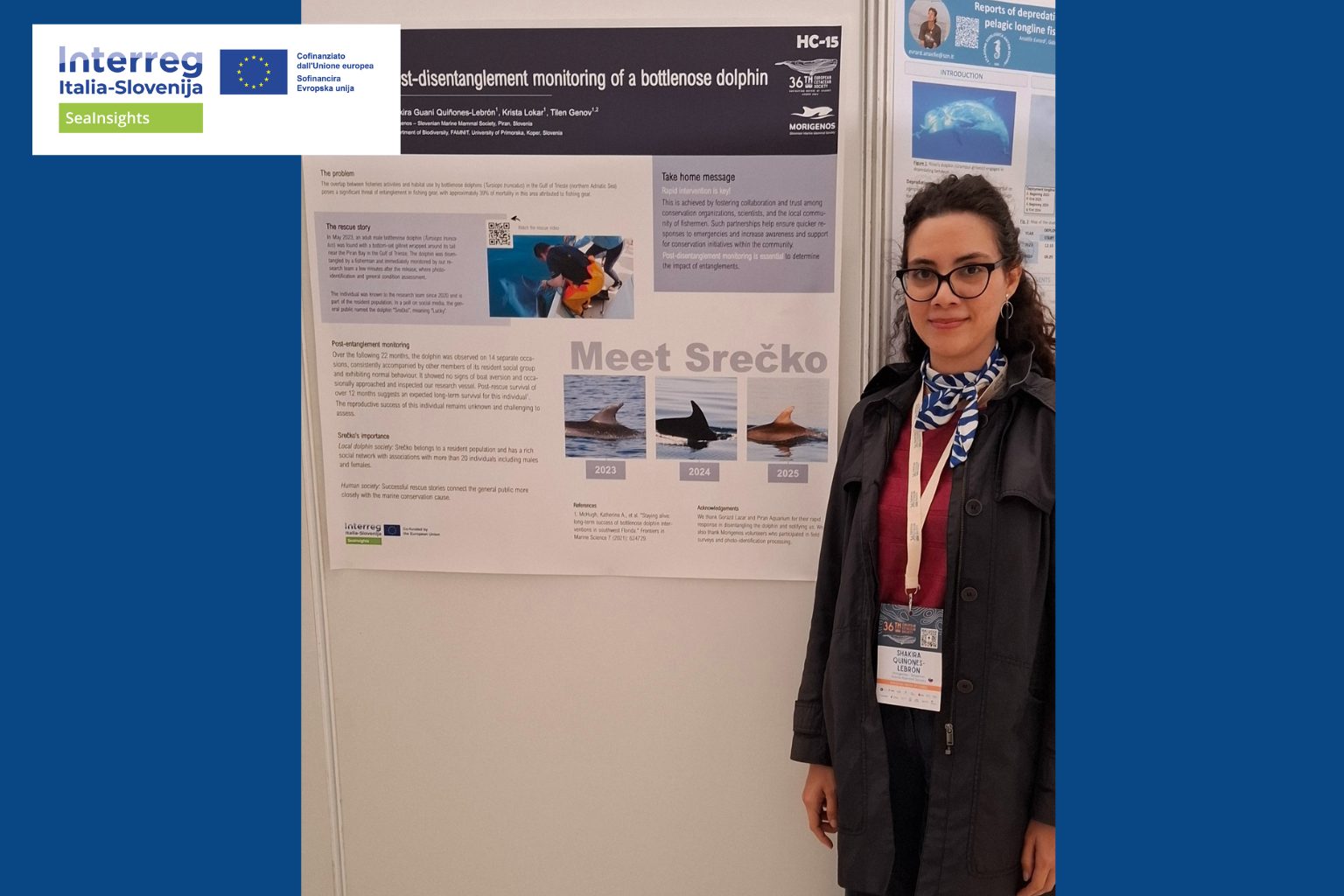
On February 4th, just off Piran, we encountered several familiar fins that Morigenos has been monitoring for many years. Among them were Galatea, Olaf, Natali, Neptun, Unagi, Saša, and many others. We have known some of these dolphins for nearly 22 years. We were especially happy to see that our / your “rescuee” Srečko (Lucky) was in the group. If you don’t know his story yet, you can check it out here.
We were also particularly excited to capture young dolphins on camera. This is encouraging, as some calves do not survive their first year. As some of our loyal followers may recall, last summer we reported on a “baby boom,” but at the time, we were uncertain about its outcome. While we know that some calves did not make it through their first year, we are happy that many did.
Thank you for following our journey! If you’d like to support our efforts in protecting these incredible creatures, you can make a donation here or adopt a dolphin here.

President of Morigenos Nominated for Delo’s Person of the Year 2024

President of Morigenos Nominated for Delo’s Person of the Year 2024

We were very proud to follow the announcement of Delo newspaper’s Person of the Year 2024, held on 9 January 2025 in Ljubljana. One of the nominees for this prestigious recognition was our president, Dr. Tilen Genov, which is an exceptional testament to his dedication and long-standing contributions to the research and conservation of marine mammals.
We first shared the news of this nomination on our social media platforms, celebrating this remarkable achievement with our community. Dr. Genov, who also serves as the Chair of the European Cetacean Society, has significantly advanced our understanding of dolphins in Slovenia and the Gulf of Trieste. Through his work with Morigenos, he has not only contributed to their protection but also raised broader awareness of the importance of marine ecosystems.
This nomination is not just a recognition of Dr. Genov’s work; it is also a reflection of the collective efforts of all who support our mission and collaborate toward a brighter future for marine mammals and the marine environment. We are deeply grateful for your unwavering support and proud that our work is being acknowledged by a wider audience. We extend our heartfelt congratulations to all the nominees, and especially to the award recipient, Prof. Dr. Samo Zver.
Thank you to everyone who supported our candidate during this special occasion and joined us in celebrating this achievement!

Few moments from the Award Ceremony:

Common dolphin spotted in Izola and Koper

Common dolphin spotted in Izola and Koper

Over the past few days, we have received several calls reporting sightings of a single dolphin in Izola and Koper, reported to be exhibiting unusual behaviours. From the photographs and video, we were able to determine that the animal is a common dolphin (Delphinus delphis). We were also able to individually identify the dolphin and determine that this is the same individual that the Morigenos team observed in Koper back in 2022. The same individual was observed two weeks ago in the Miramare protected area and in Grignano, reported to us by our friends from Shoreline. The same animal has also been repeatedly observed around the islands of Rab and Krk during the past year, which we could determine based on photographs sent to us by our various followers. Thanks to additional reports we received today, our team was able to locate the dolphin to further assess its condition. Based on video footage received and our own observations in the field, The dolphin is not injured or debilitated. However, its somewhat unusual behavior is likely due to being solitary, as this is a species that normally lives in large groups.
Common dolphins in this area are a relatively rare occurrence. Previously abundant in the Adriatic, the common dolphin has almost disappeared due to targeted killing campaigns that lasted until the 1960s.
What to do?
Please, DO NOT INTERACT with the dolphin. Interacting with solitary dolphins only worsens their behavior and puts them at more risk. It can also put you at risk. Although dolphins generally do not attack humans, this is a wild animal already exhibiting atypical behaviors and could potentially hurt a person, or transmit infectious diseases. Do not feed the animal and do not enter the water.
If you see this dolphin, please CONTACT US by phone on +386 31 77 10 77. We are monitoring its movement and behavior. Photos or videos of the dolphin are especially useful – please send them to pr@morigenos.org.
To learn more about the common dolphin in the northern Adriatic, see our open-access publication:
Genov T., Kotnjek P., Centrih T. 2021. Occurrence of common dolphins (Delphinus delphis) in the Gulf of Trieste and the northern Adriatic Sea. Aquatic Conservation: Marine and Freshwater Ecosystems 31 (Special Issue: Conservation and Research Status of Mediterranean Delphinus delphis): 69–75. https://onlinelibrary.wiley.com/doi/epdf/10.1002/aqc.3407
You can also learn more about the decline of the common dolphin in the Adriatic in our latest collaboration with our friends from Dolphin Biology and Conservation: Bearzi G, Bonizzoni S, Genov T, Notarbartolo di Sciara G. 2024. Whales and dolphins of the Adriatic Sea: present knowledge, threats and conservation. Acta Adriatica 65:75-121. https://acta.izor.hr/acta/pdf/65_1_pdf/65_1_1.pdf