

22-06-2026
Morigenos – Slovenian Marine Mammal Society contributes to new research on endangered Arabian Sea humpback whales
Morigenos – Slovenian Marine Mammal Society contributes to new research on endangered Arabian Sea humpback whales
A new international study, to which Morigenos – Slovenian Marine Mammal Society contributed, provides important new insights into the Arabian Sea humpback whale (Megaptera novaeangliae), one of the most endangered and least studied populations of large whales in the world. The study was published in the scientific journal Frontiers in Marine Science.
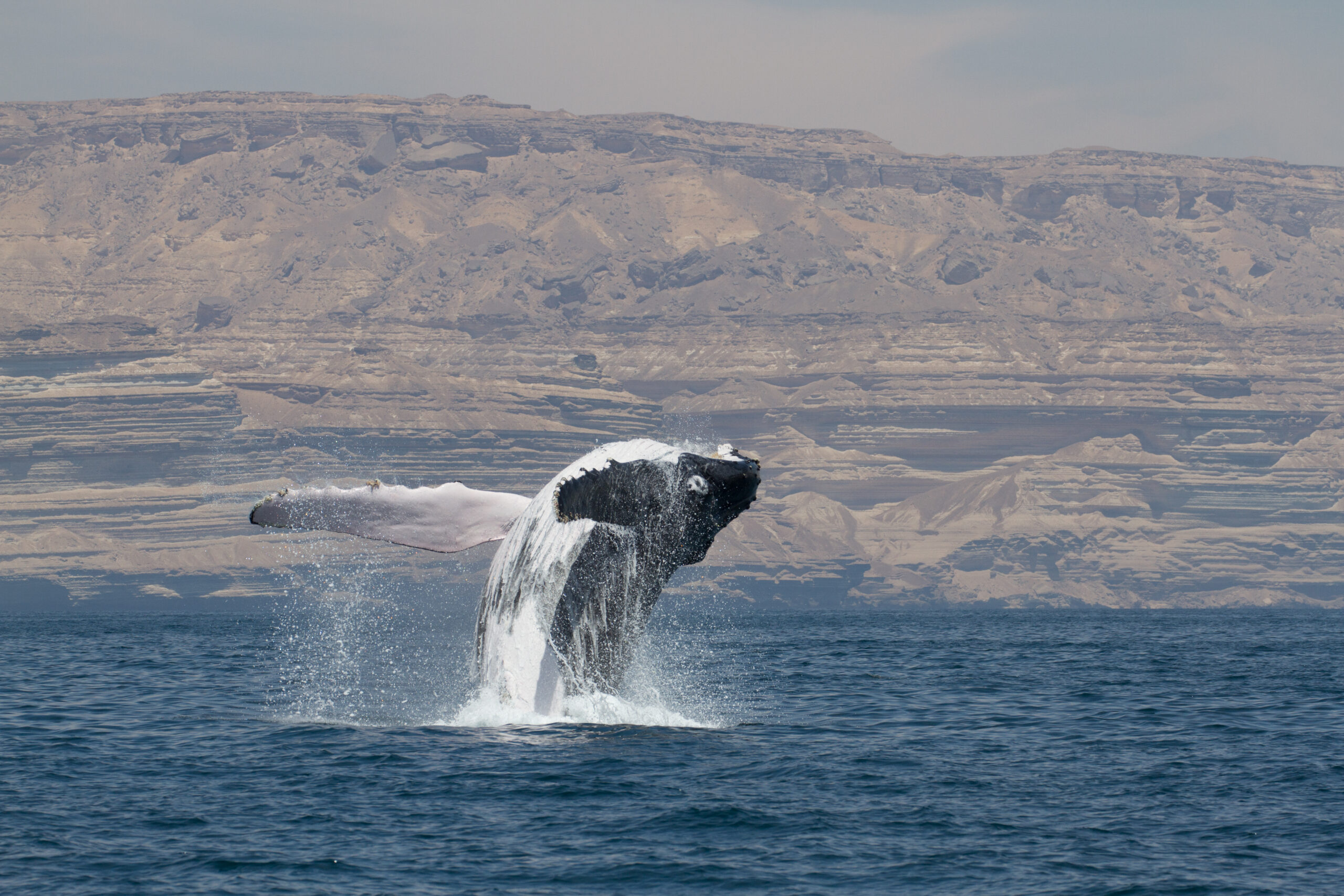
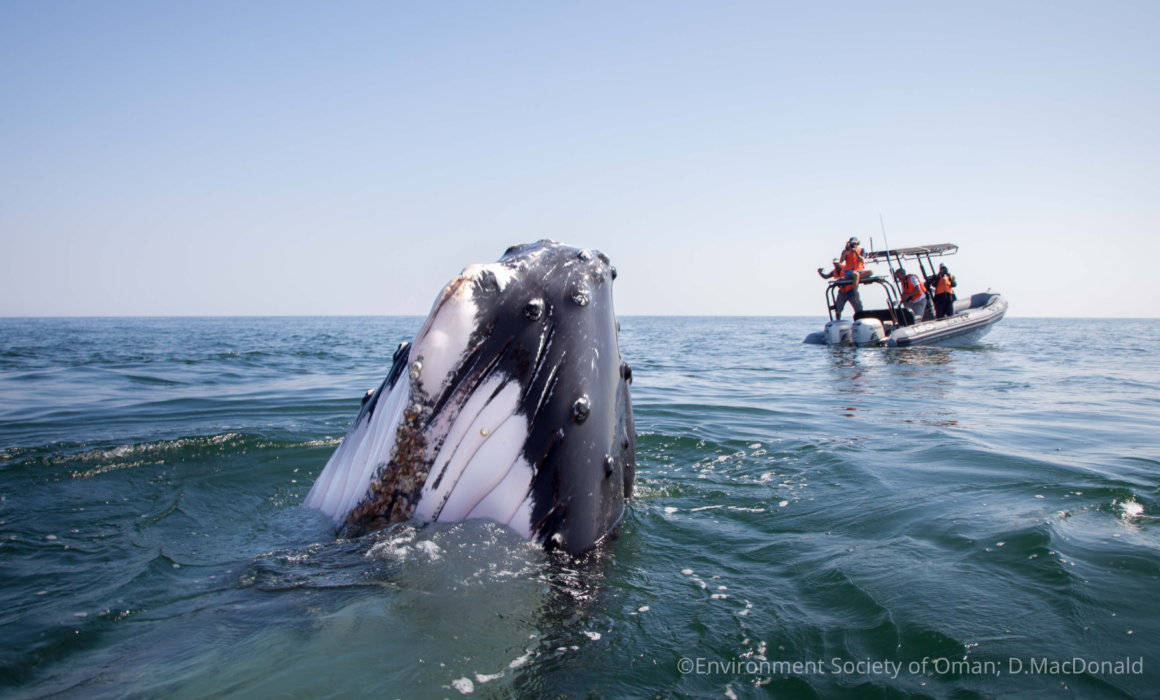
Photo: Environment Society of Oman; D.MacDonald
Arabian Sea humpback whales are unique because, unlike other humpback whale populations, they do not undertake long seasonal migrations between feeding and breeding grounds. Instead, they remain year-round in the waters of the northwestern Indian Ocean. “Arabian Sea humpback whales are a biological anomaly,” said Dr Andrew Willson of Future Seas, the lead author of the study. Due to their small population size and long-term isolation, this population is classified as Endangered on the International Union for Conservation of Nature (IUCN) red list, with an estimated abundance of approximately 82 individuals. “Many humpback whale populations have recovered strongly since the end of commercial whaling, but this population remains on the brink of extinction,” said Dr Tilen Genov of Morigenos, the co-author of the study.
To better understand their movements and habitat use, researchers tracked 14 humpback whales off the coast of Oman using satellite tags between 2014 and 2017. The results showed that the whales spend most of their time over the continental shelf, with the Gulf of Masirah in Oman emerging as the most important area. It was there that researchers recorded the highest frequency of behavioural patterns indicating intensive use of this habitat.
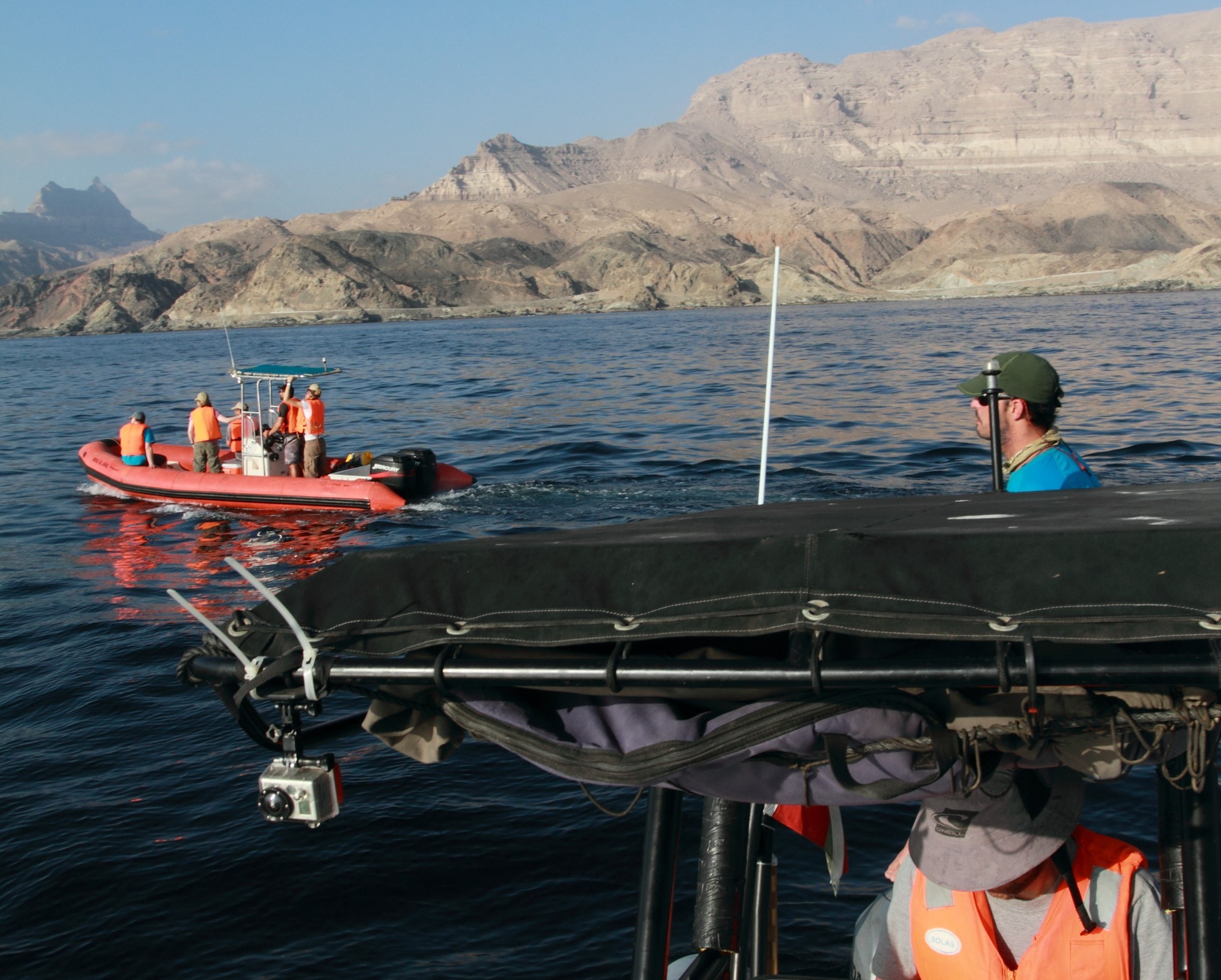
Photo: Environment Society of Oman; T.Collins


 Ali ste videli delfine?